Build a clean record
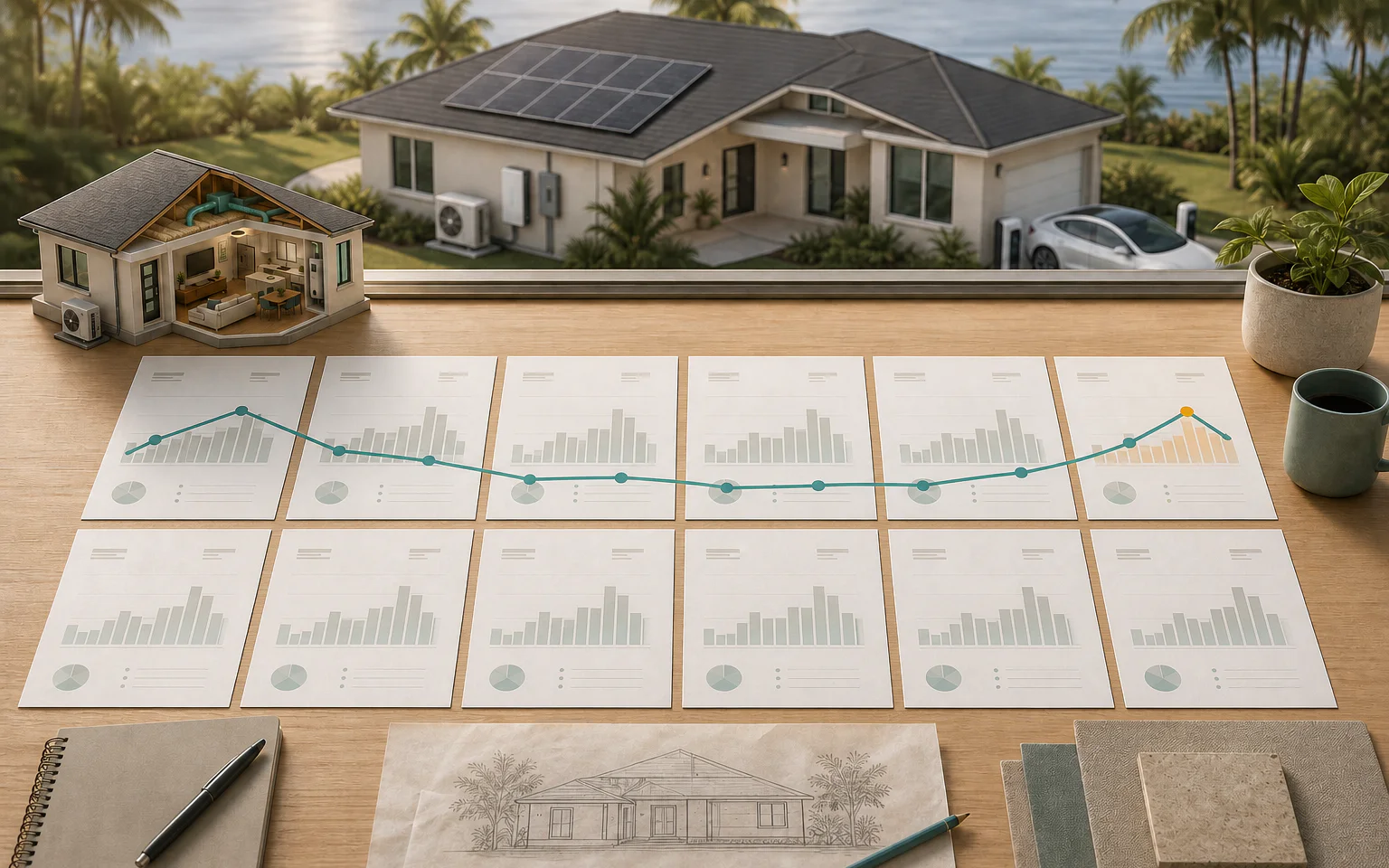
Download the original bill for each of the last twelve to twenty-four months. Record service dates, billing days, kilowatt-hours, total electric charges and any demand or time-of-use detail. Note estimated meter reads, credits, deposits and non-energy fees so they do not distort the comparison.
Calculate average daily use by dividing monthly kilowatt-hours by billing days. This removes part of the noise created by 28-day and 33-day cycles. When rate data is clear, calculate an effective energy cost by dividing relevant charges by kilowatt-hours; treat it as a comparison aid, not a substitute for the utility tariff.
Add the events the bill cannot see
Create a simple timeline with move-in dates, extended travel, guests, thermostat changes, equipment failures, pool schedules, EV charging, renovations and major appliance additions. Add roof, HVAC and water-heater service dates. Weather and humidity should be considered when comparing cooling months.
Without this timeline, a genuine load increase may look like equipment degradation, or an efficiency improvement may appear ineffective because occupancy changed at the same time.
Separate base load from cooling load
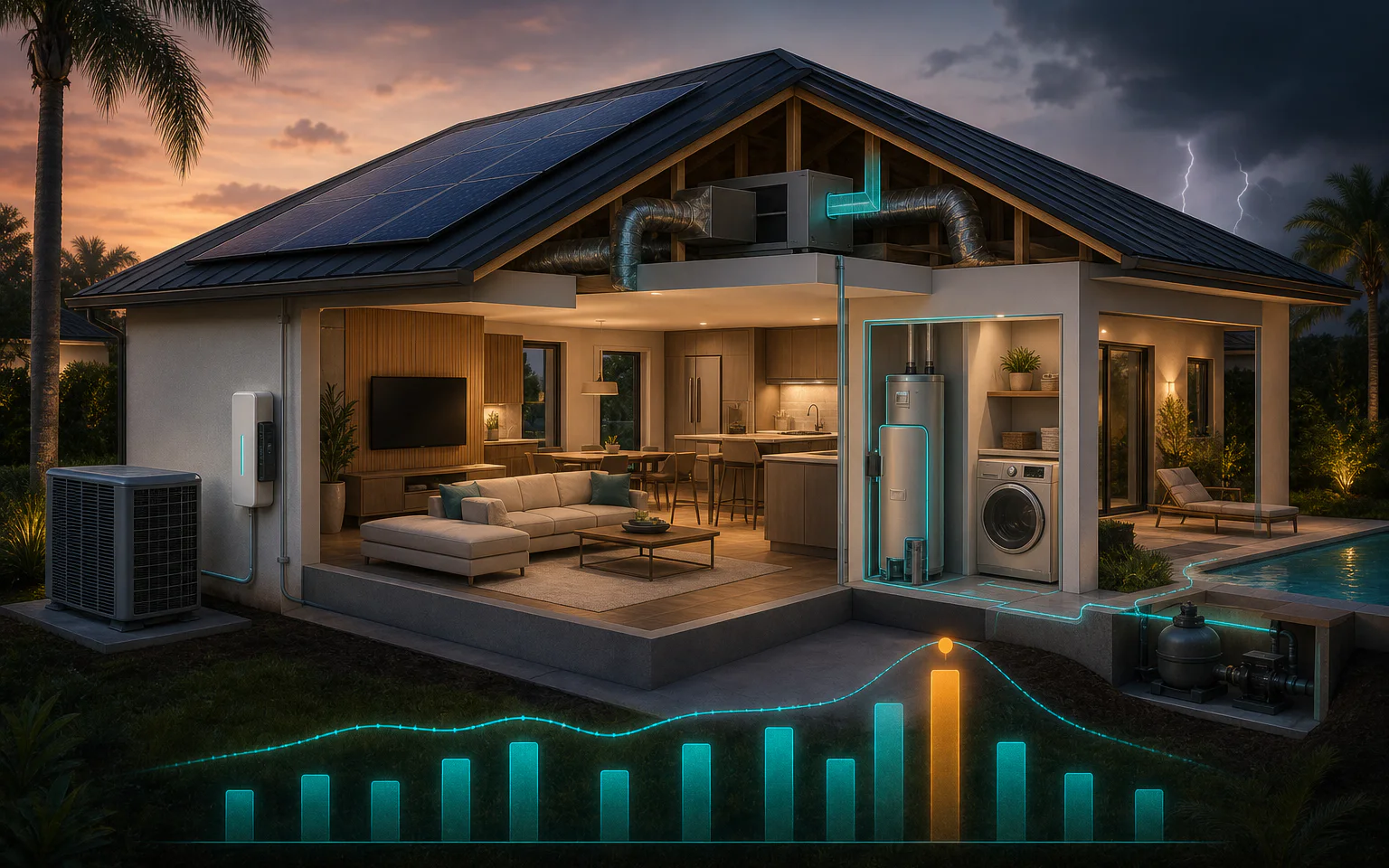
The lowest mild-weather months provide a rough view of loads that operate throughout the year: refrigeration, water heating, electronics, lighting, pumps and standby use. The increase during hot months includes cooling plus any seasonal changes in occupancy or equipment.
This is not a formal end-use disaggregation. It is a screening tool. If the base remains unexpectedly high, investigate always-on loads before assigning the entire problem to HVAC. If the summer slope changes sharply, look at cooling performance, thermostat schedules, ducts, envelope conditions and weather.
Use interval data carefully
Smart-meter portals or energy monitors may show hourly or sub-hourly patterns. Repeating overnight loads, long cooling cycles and large scheduled equipment become easier to recognize. Label known devices and compare several similar days before drawing a conclusion. One spike can be normal; a repeated pattern is more useful.
Monitoring does not replace equipment testing. It narrows the question. A persistent HVAC signature can justify a service or airflow evaluation. An unexplained overnight base can direct attention to pumps, water heating or other continuous loads.
Translate history into project inputs
For HVAC, the bills help explain seasonal operation but do not replace a room-by-room load calculation. For solar, the U.S. Department of Energy recommends reviewing prior electricity use to understand annual and seasonal needs. Adjust the historical baseline for committed future changes: an EV, electrified water heating, a home addition, insulation work or a different occupancy schedule.
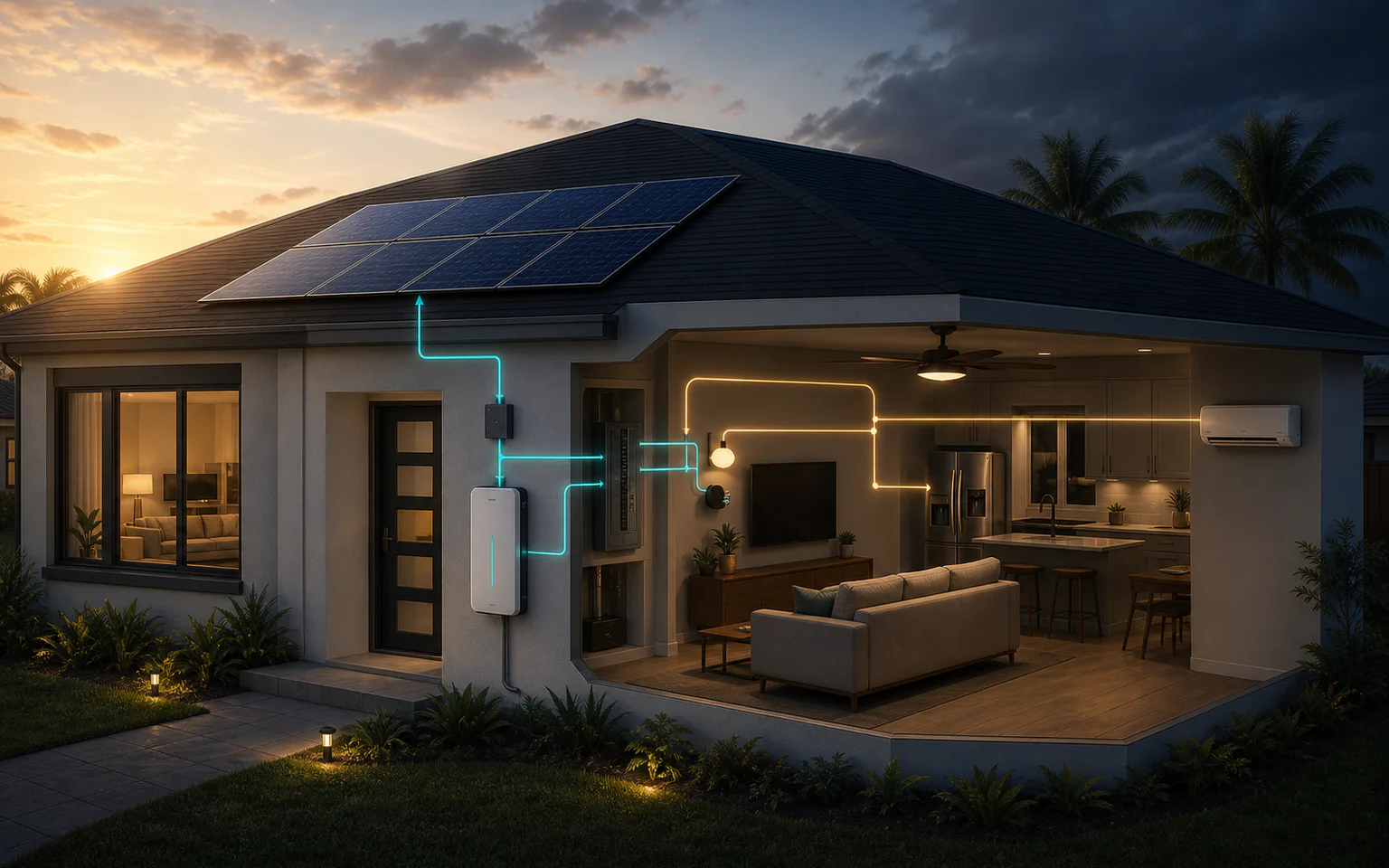
For batteries, annual kilowatt-hours are not enough. Define the circuits and power levels that matter during an outage, then use interval data or equipment specifications to estimate duration. Backup design is a power-and-energy problem, not a percentage of the annual bill.
Preserve a before-and-after comparison
Store the baseline with its assumptions. After an upgrade, compare normalized use across similar seasons and describe weather or occupancy differences. If monitoring was installed, retain a representative period before work. Look at comfort and humidity alongside energy; a project that improves indoor conditions may change runtime in ways the bill alone cannot explain.
Twelve months of bills do not diagnose the property by themselves. They make the next inspection, model or proposal more specific—and make completed work easier to verify.
Use this answer in a whole-property plan
Connect this topic to the planning hub, the primary decision page and the evidence standard that governs the next step.
- Planning hubWhole-home upgrade planning
- Primary decision pageEnergy advisory services
- Methodology and standardsHow BetterPowered uses illustrative scenarios
- Methodology and standardsBetterPowered Contractor Standard
Primary sources
Claims in this article were reviewed against these government and primary sources.
- 01 Consumer Guide to Home Energy AssessmentsU.S. Department of Energy · August 9, 2026
- 02 A Step-by-Step Guide for Consumers Going SolarU.S. Department of Energy · August 9, 2026
- 03 Homeowner’s Guide to SolarU.S. Department of Energy · August 9, 2026