Define three different goals
Annual bill offset, daily energy shifting and outage backup are not the same design target. Solar production is usually discussed in annual kilowatt-hours. A battery has an energy capacity measured in kilowatt-hours and a power limit measured in kilowatts. Backup also depends on the circuits connected, starting loads, reserve settings and whether solar can recharge during the outage.
Write the goals separately before comparing products. Otherwise a proposal can appear to answer all three while documenting only annual solar production.
Forecast the load after planned improvements
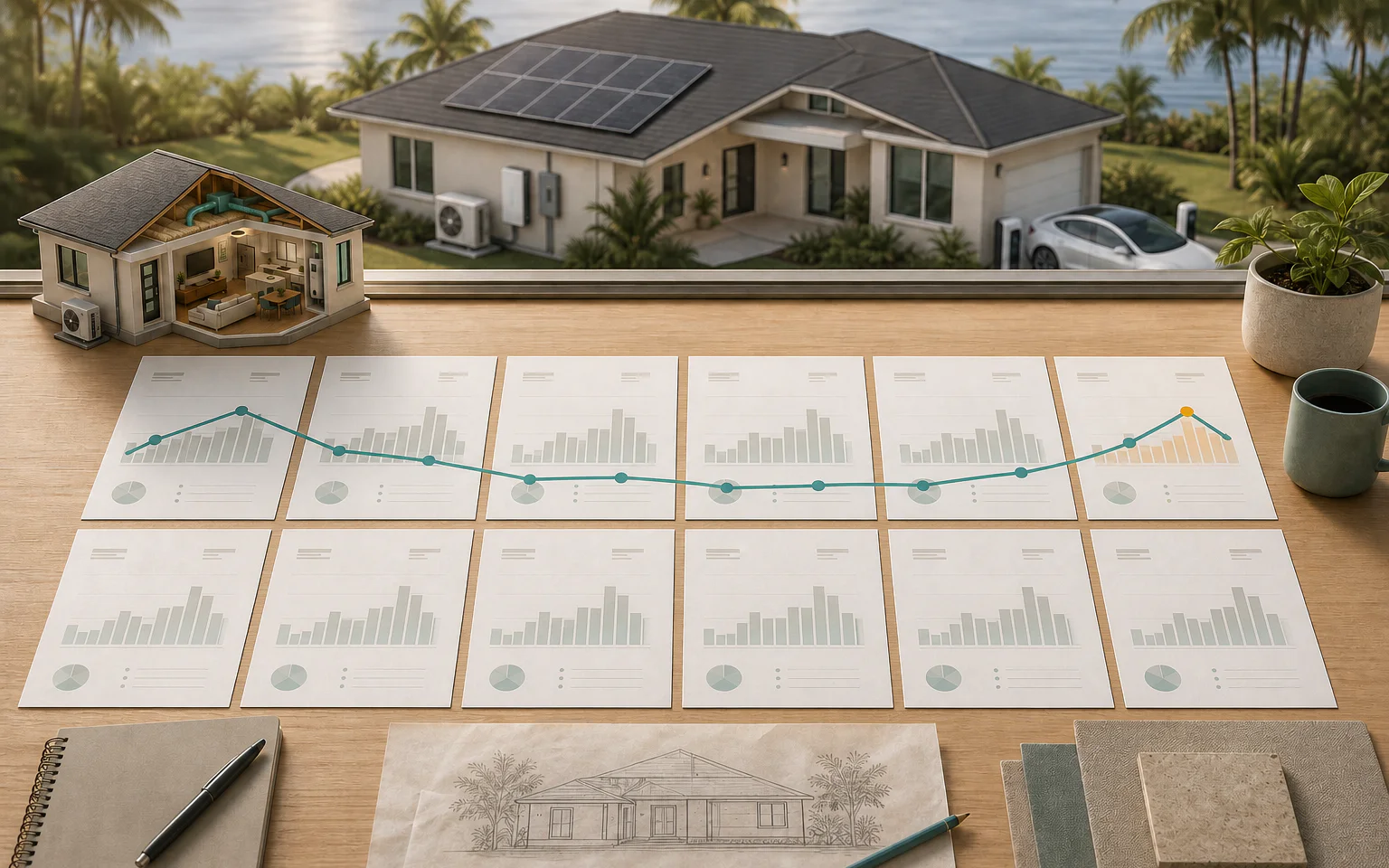
Use at least twelve months of consumption, then adjust for changes with high confidence. Better insulation, duct repair or a new right-sized HVAC system may reduce cooling use. An EV, heat-pump water heater or converted cooking equipment may increase electricity use. A new occupant or room addition can change both.
Avoid subtracting promotional savings estimates as though they were guaranteed. Use a range when project performance is uncertain, and show how that range changes panel count or expected offset.
Size solar to the roof, load and utility rules
The U.S. Department of Energy explains that solar savings depend on consumption, system size, roof orientation and sun exposure, ownership structure, electricity rates and compensation for exported energy. Ask for the assumptions behind each of those inputs.
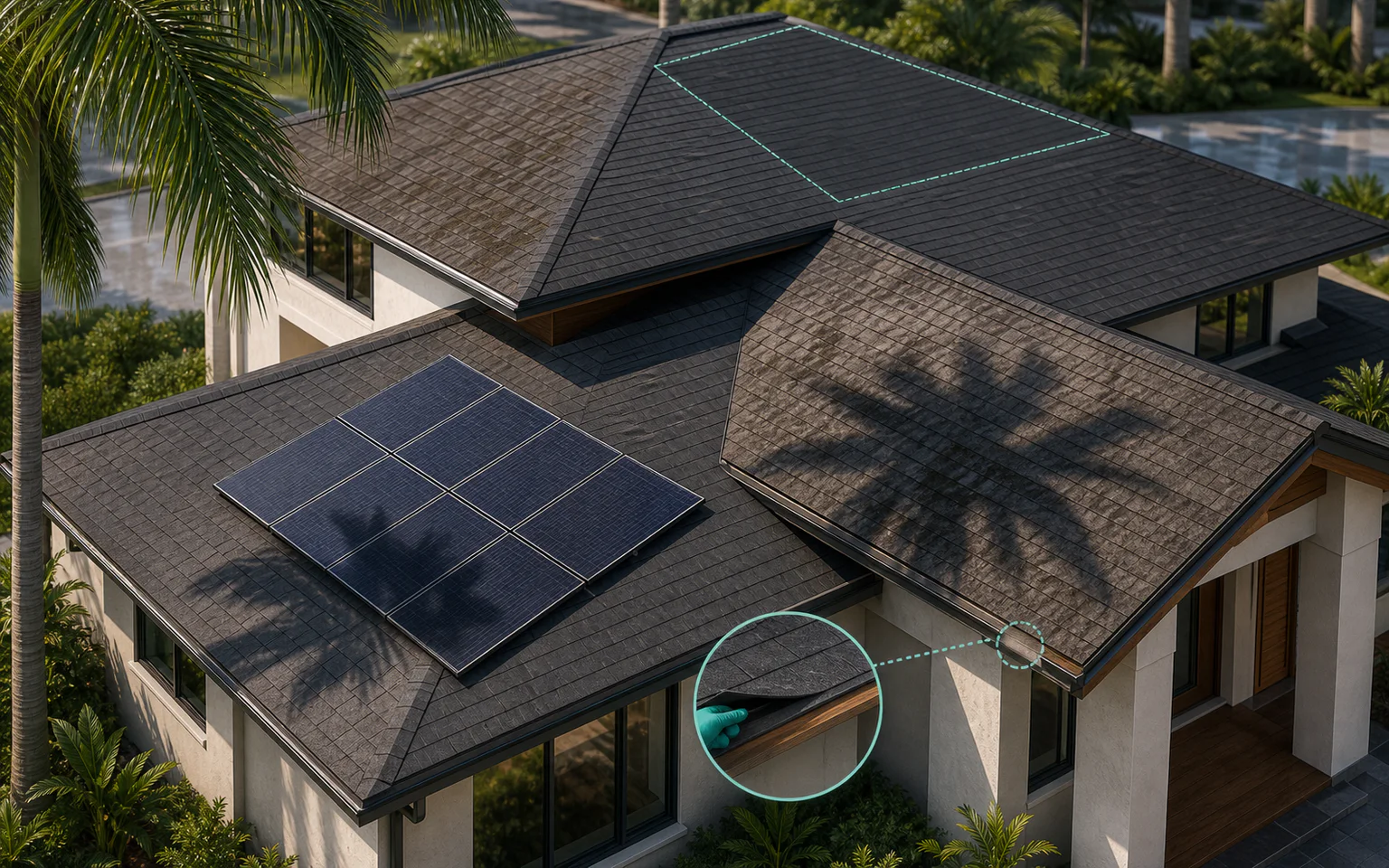
The roof may limit the array before the load does. Conversely, a large roof does not mean every available panel is economically useful. Compare annual and monthly production with the future load, and include expected degradation and system losses in the model.
Build a critical-load plan for the battery
List what must operate during an outage and for how long. Refrigeration, communications, lighting, medical equipment, a well pump or selected receptacles may be critical. Central air conditioning has substantial running and starting requirements; backing it up can change inverter, battery and load-management design.
For each load, document running power, start-up behavior, expected daily use and whether it can be interrupted. Then decide the minimum reserve that should remain in the battery. A design for four hours has a different purpose and cost from one intended for multiple cloudy days.
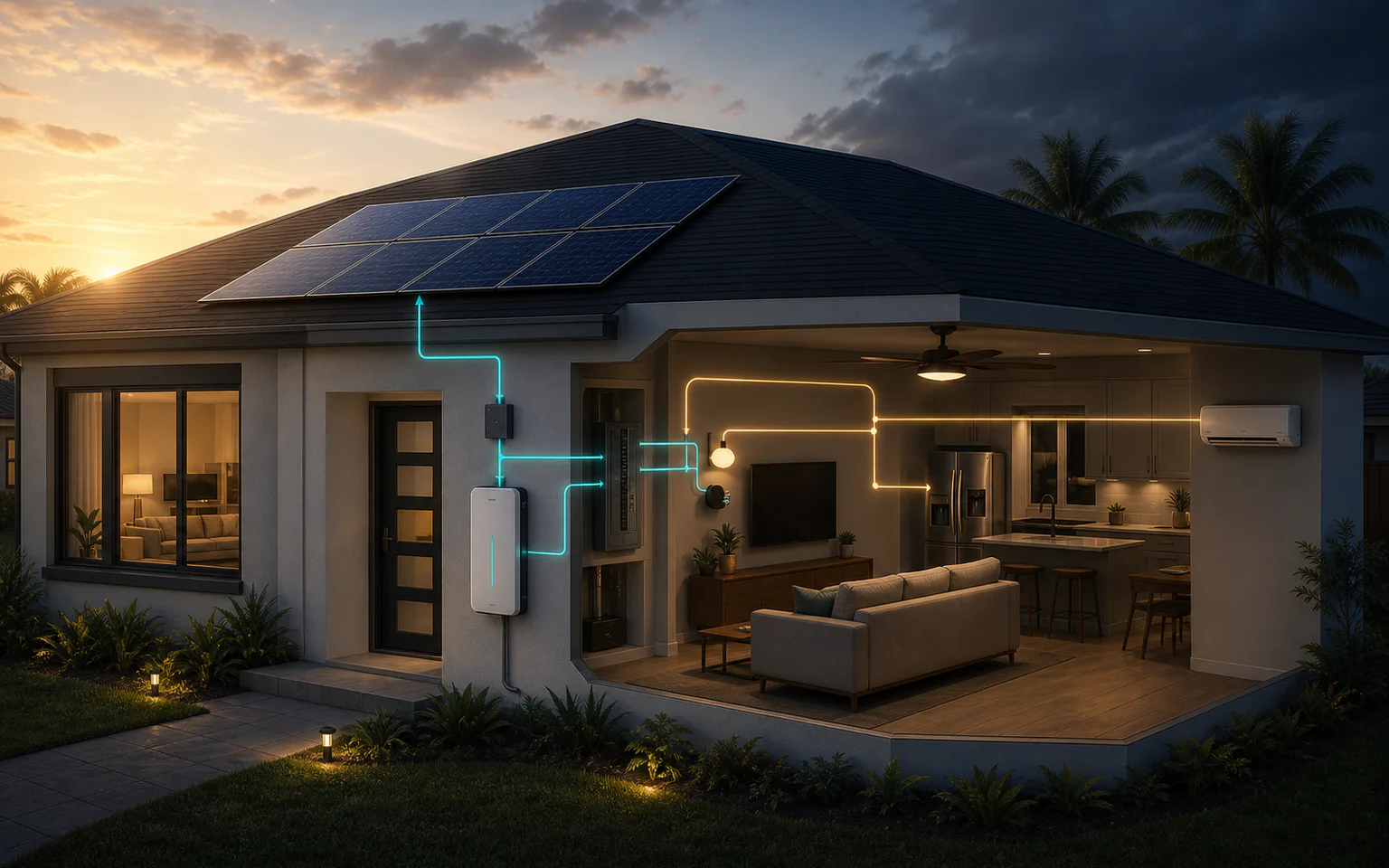
Confirm that the proposed system can operate when the grid is down. Grid-connected solar without appropriate islanding and storage controls normally shuts down for safety during an outage. The design should show the backup gateway or transfer equipment, protected circuits, operating modes and black-start behavior where applicable.
Verify installation and monitoring
The final records should include permit drawings, one-line electrical diagram, equipment model numbers, warranties, shutdown instructions and the configured operating mode. Test a controlled grid-loss event if the installer and local requirements permit it. Confirm that the homeowner can see solar generation, household consumption, grid exchange, battery state and backup reserve in the monitoring interface.
Monitoring is also how assumptions become evidence. Review monthly production against the model, investigate persistent alerts and update load priorities when household needs change.
Recheck incentives at the decision date
Do not use an old proposal’s tax-credit language as current guidance. As of this review on August 9, 2026, the IRS states that the federal Residential Clean Energy Credit is unavailable for new qualified property placed in service after December 31, 2025. State, utility and local programs can have different rules and availability. Verify the live program, property, applicant, contractor and installation date before including an incentive in the budget.
The right system is not the one with the most panels or largest battery. It is the one sized to documented property conditions and a clearly defined operating goal.
Use this answer in a whole-property plan
Connect this topic to the planning hub, the primary decision page and the evidence standard that governs the next step.
- Planning hubWhole-home upgrade planning
- Primary decision pageEnergy advisory services
- Methodology and standardsHow BetterPowered uses illustrative scenarios
- Methodology and standardsBetterPowered Contractor Standard
Primary sources
Claims in this article were reviewed against these government and primary sources.
- 01 Homeowner’s Guide to SolarU.S. Department of Energy · August 9, 2026
- 02 A Step-by-Step Guide for Consumers Going SolarU.S. Department of Energy · August 9, 2026
- 03 Residential Clean Energy CreditInternal Revenue Service · August 9, 2026