Start with energy, not only dollars
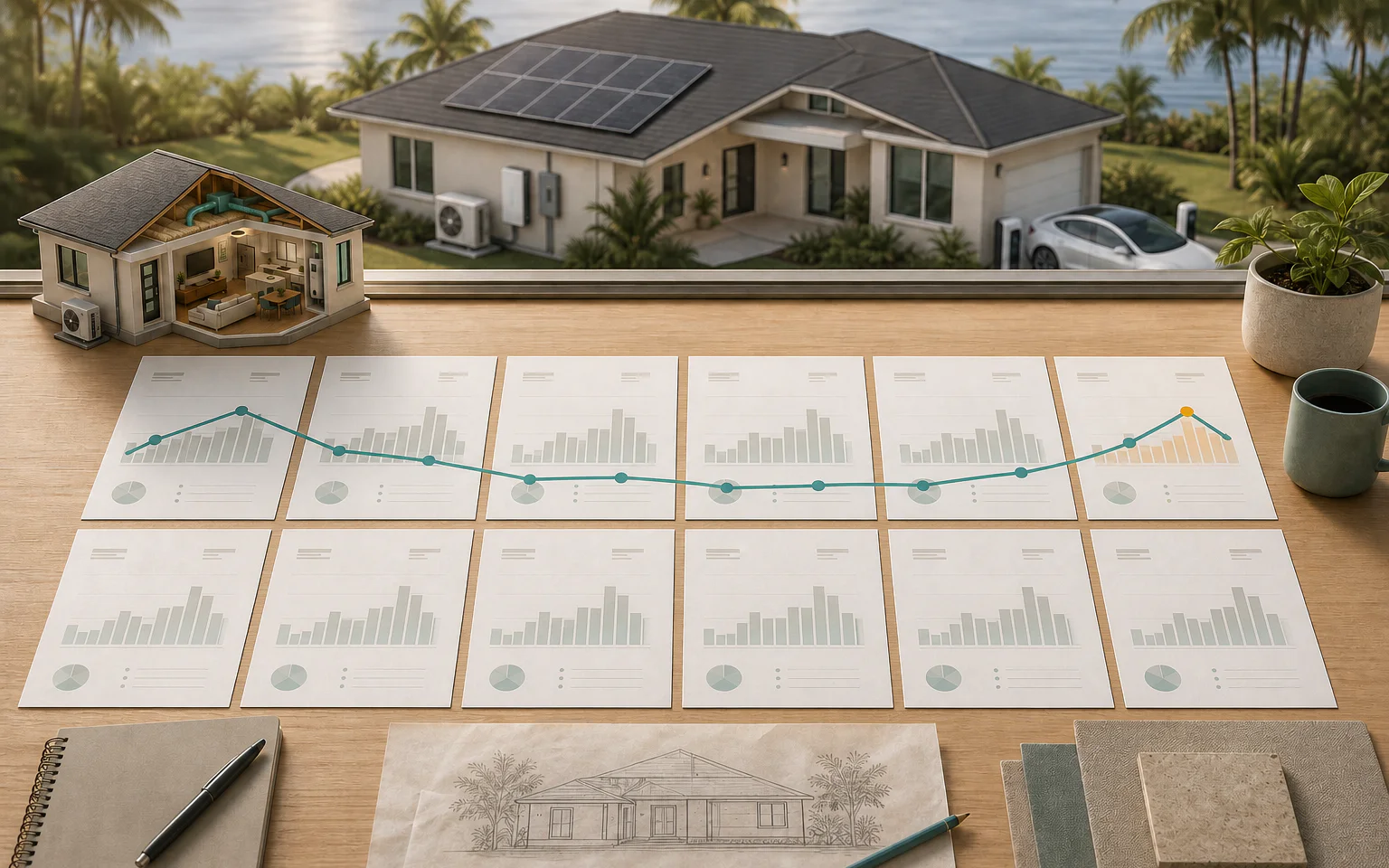
The amount due can rise even when the home uses the same amount of electricity. A rate adjustment, fuel charge, longer billing cycle or expired credit can change the cost without changing the property. Begin with monthly kilowatt-hours, billing dates and the effective price per kilowatt-hour. Then compare the same months across years when that history is available.
In Florida, weather matters. A hotter or more humid month can keep cooling equipment running longer. Occupancy matters too: guests, remote work, a new electric vehicle, a pool pump schedule or a failing water heater can alter the load. Write down those changes before deciding the building itself is at fault.
Look for the shape of the problem
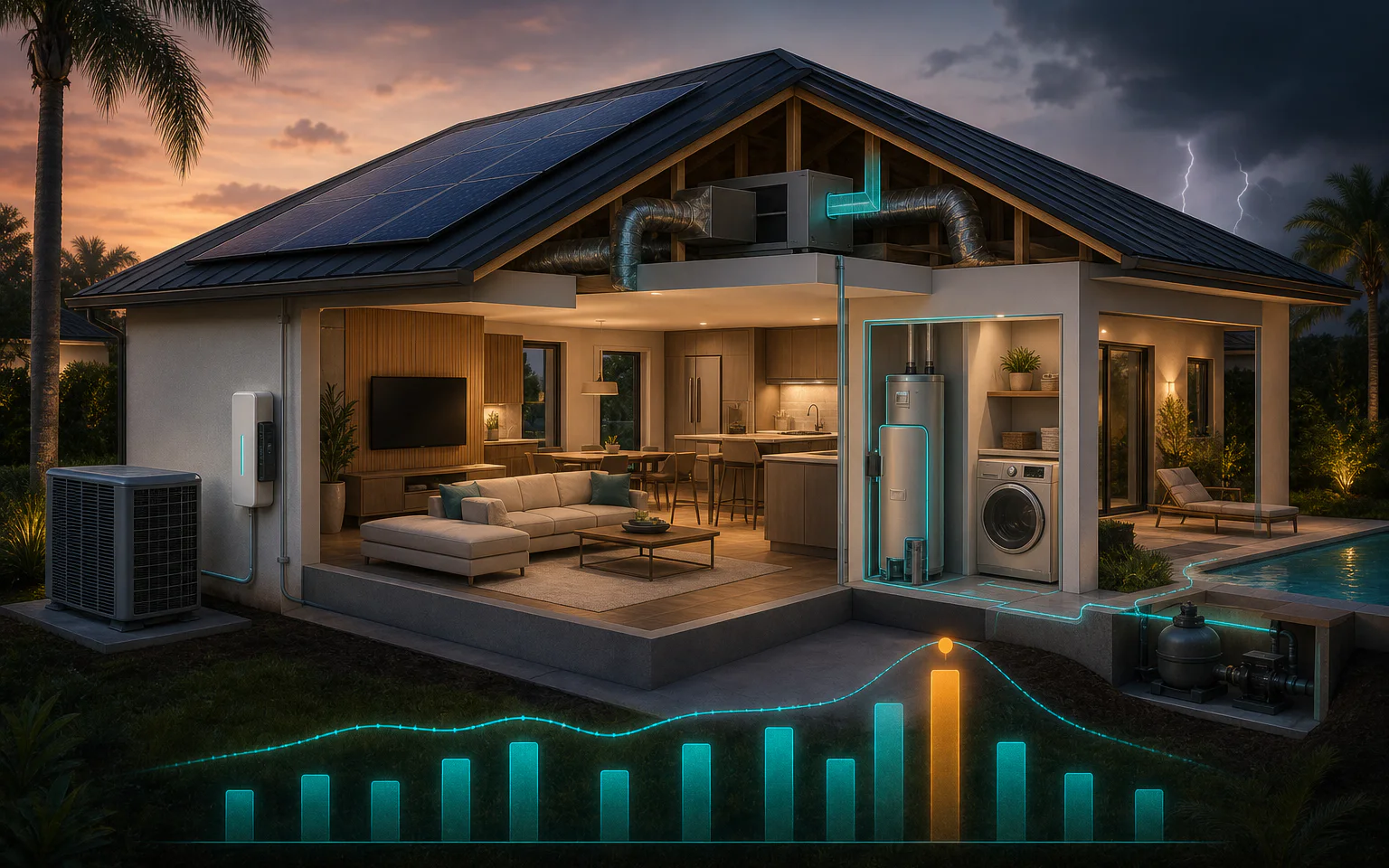
A high base load in mild months points in a different direction than a sharp summer increase. A sudden step after a service visit or equipment failure deserves different attention from a slow rise over several seasons. Twelve months of bills help separate those patterns; interval data from a smart meter or energy monitor can make them clearer.
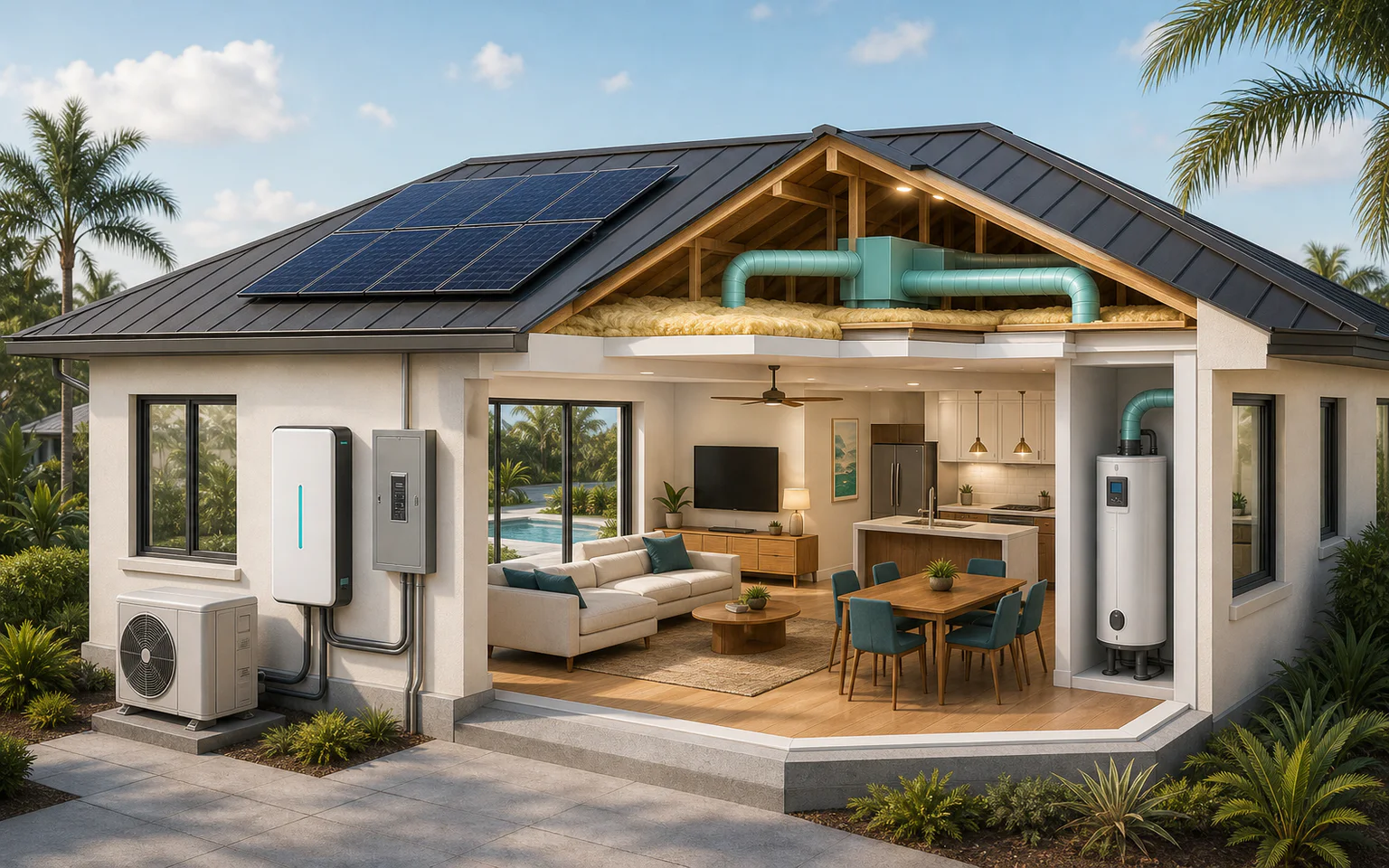
The bill still cannot show where the energy went. Cooling equipment may run correctly while leaky ducts lose conditioned air in an attic. A new system may work against insulation gaps, uncontrolled air leakage or rooms with poor airflow. The thermostat may be satisfied while humidity and comfort remain uneven.
Check the connected systems
A useful first review covers the outdoor and indoor HVAC equipment, filter and coil condition, thermostat schedule, duct connections, attic insulation, visible air gaps, windows and doors, water heating, pool equipment and any recently added electrical loads. This is not a shopping list. It is a way to identify which measurements or professional disciplines are relevant.
When the evidence is unclear, a professional home-energy assessment can add calibrated tests. The U.S. Department of Energy describes blower-door testing for whole-home air leakage, infrared imaging for thermal patterns and duct-blower testing for duct leakage. Those tests answer different questions, so they should be selected around the symptom rather than added automatically.
Turn the bill into a baseline
Keep the original PDF or image for each bill and record total kilowatt-hours, billing days, total cost and notable events. Normalize daily use by dividing kilowatt-hours by billing days. Compare like seasons. If rate details are available, separate consumption from price. If a monitor is installed, label large recurring loads instead of treating every spike as a problem.
The baseline should exist before a major upgrade whenever practical. After work is completed, compare similar weather and occupancy conditions, not just the next bill. The purpose is to determine whether the project changed energy use, comfort or both.
Decide what to evaluate before what to buy
An urgent equipment failure may require immediate replacement. Even then, duct condition, airflow and sizing can be checked as part of that decision. When the situation is not urgent, diagnose first, prioritize the highest-confidence opportunities and request proposals against a defined scope.
A high bill is a valuable signal. It becomes a useful decision tool only when it is connected to consumption history, property conditions and measured evidence. BetterPowered starts there so the first purchase is tied to a reason—not just to the size of the latest bill.
Use this answer in a whole-property plan
Connect this topic to the planning hub, the primary decision page and the evidence standard that governs the next step.
- Planning hubWhole-home upgrade planning
- Primary decision pageEnergy advisory services
- Methodology and standardsHow BetterPowered uses illustrative scenarios
- Methodology and standardsBetterPowered Contractor Standard
Primary sources
Claims in this article were reviewed against these government and primary sources.
- 01 Consumer Guide to Home Energy AssessmentsU.S. Department of Energy · August 9, 2026
- 02 Home UpgradesU.S. Department of Energy · August 9, 2026
- 03 Heat & Cool EfficientlyENERGY STAR · August 9, 2026