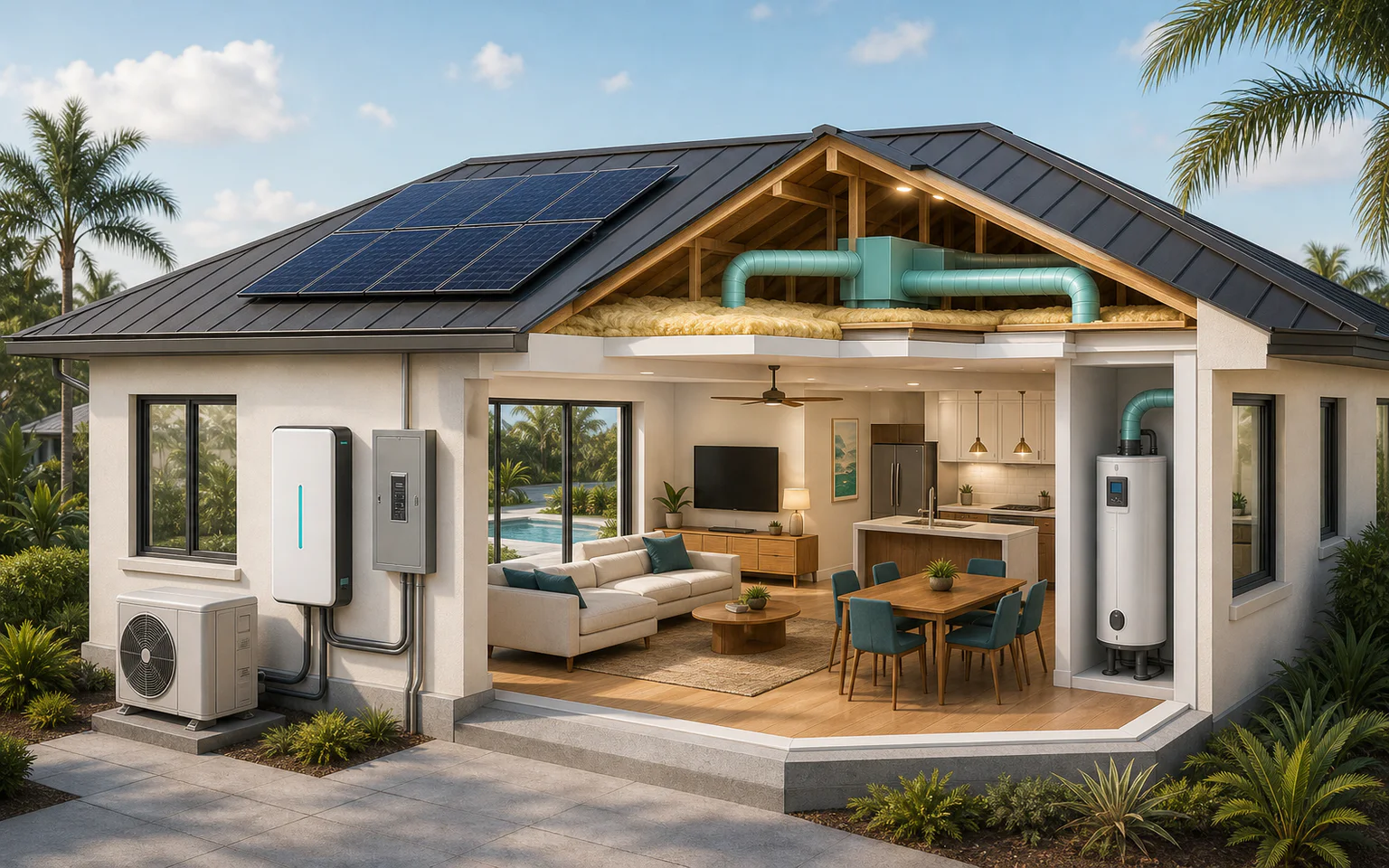
A water heater should not be treated as an isolated appliance purchase. In a whole-home upgrade, it sits at the intersection of the property’s fuel or electrical service, the household’s real hot-water pattern, the room where equipment can safely operate, and the plumbing routes that deliver water to each fixture. The U.S. Department of Energy’s whole-house weatherization guidance analyzes the building envelope, heating and cooling, electrical systems and appliance loads together, and includes water-heater work among typical mechanical measures. That is the useful planning frame: understand the dependencies first, then compare equipment.
This guide does not prescribe a water-heater type. It shows what to document, what a qualified contractor should verify, and where the decision belongs in a broader sequence. Product fit, code requirements, operating cost and project scope remain property-specific.
Start with the existing conditions, not a product name
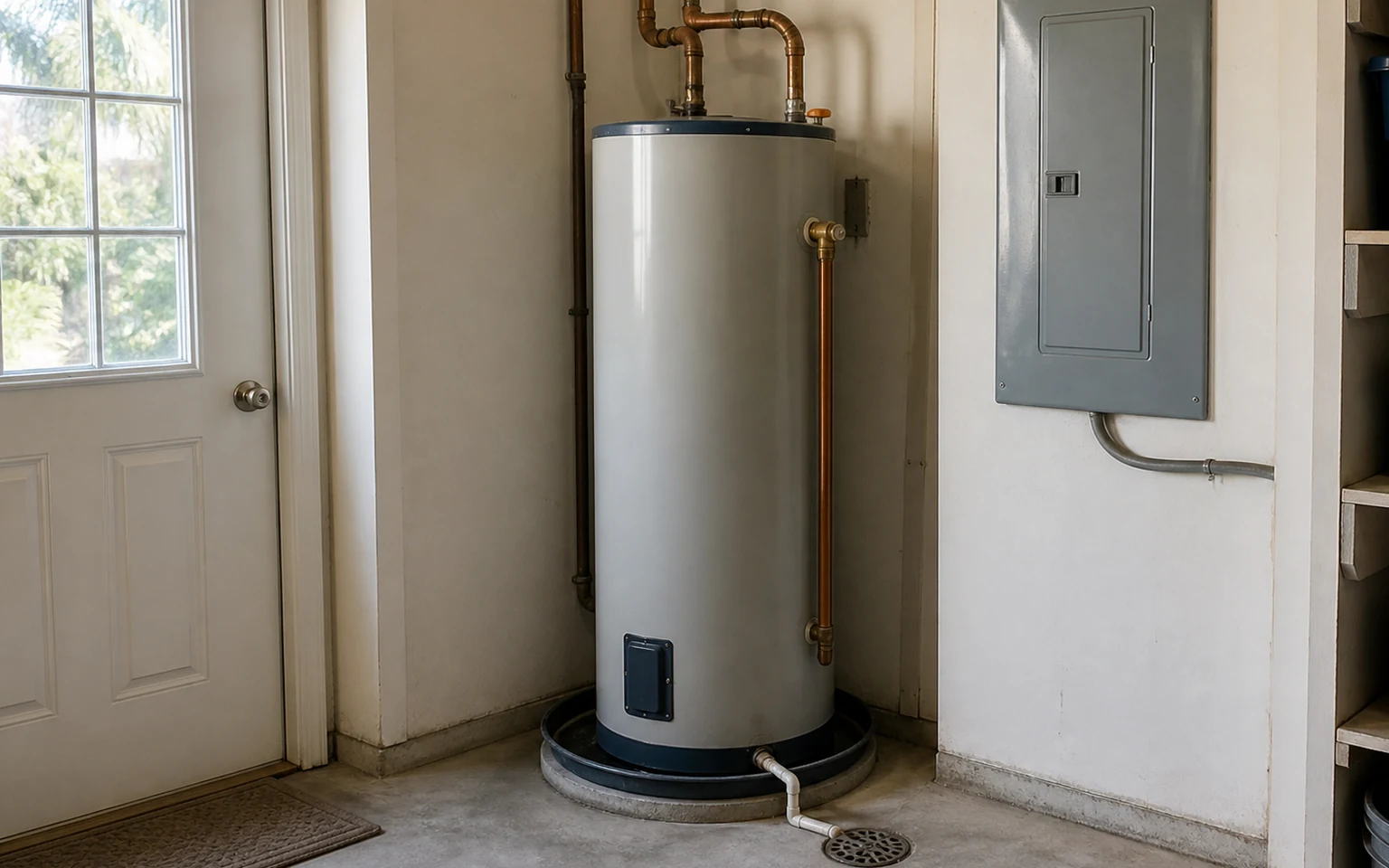
Record the current energy source, the water heater’s location, visible plumbing route, vent route if it burns fuel, nearby drainage, and the electrical circuit serving it. Note any other planned changes that could affect those conditions: a panel project, HVAC replacement, addition, bathroom renovation, new laundry equipment or a fuel change. Photograph the equipment and its manufacturer data plate for the contractor; do not guess at ratings that are not legible.
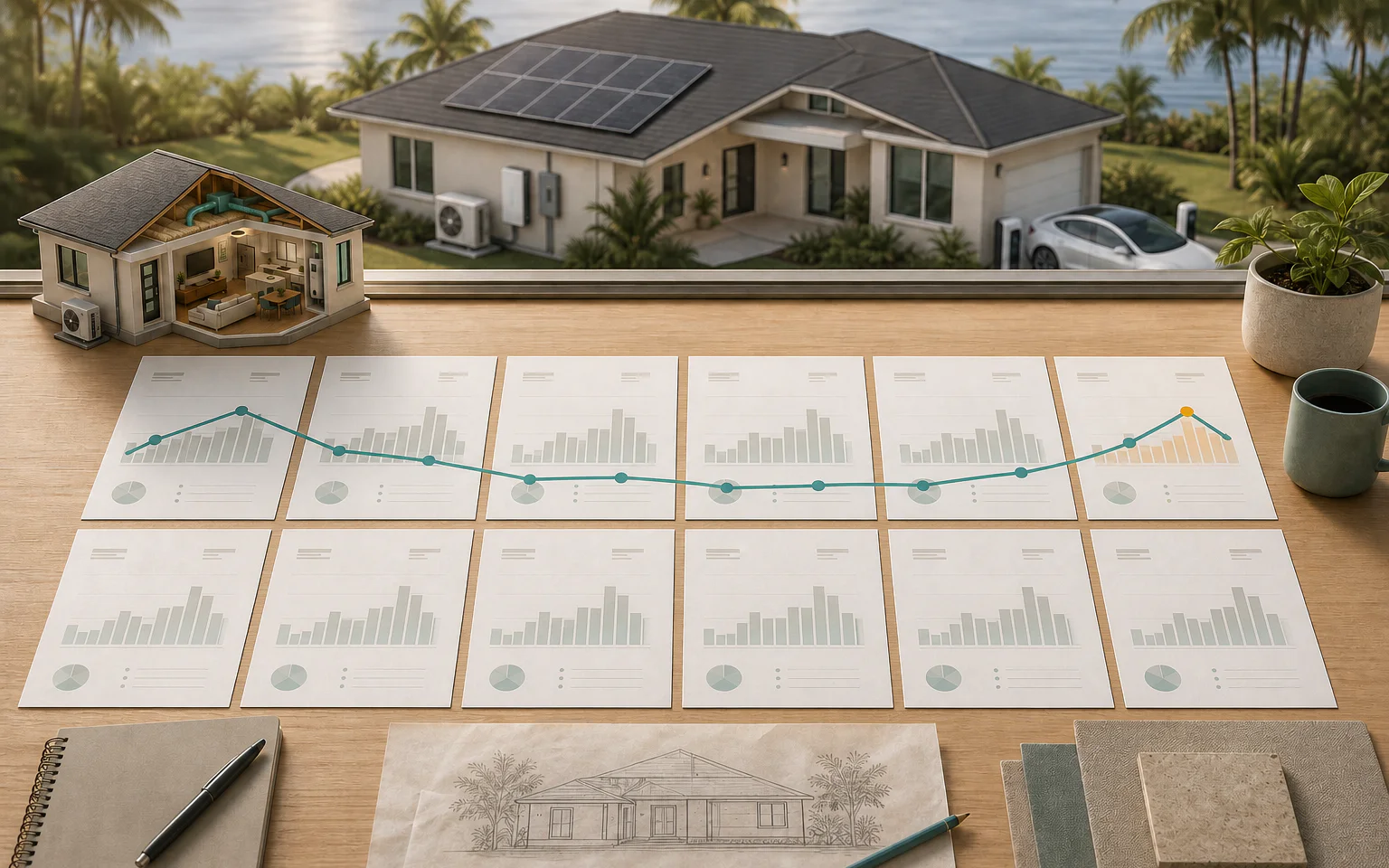
Review utility history for context, while recognizing that a whole-home bill usually does not isolate the water heater. BetterPowered’s guide to reading twelve months of electric bills explains how to separate measured history from assumptions. A proposal that predicts operating cost should disclose the household-use estimate, local energy rate, equipment efficiency and every other input. DOE’s current residential water-heater purchasing guidance cautions that efficient equipment may not be life-cycle cost-effective in every low-use case or in every local rate environment.
Measure hot-water demand before choosing capacity
Tank volume by itself is not a complete capacity test. Build a simple demand profile: which showers, sinks, dishwasher and clothes washer use hot water; which uses can overlap; whether occupancy or fixtures will change; and when the busiest hour normally occurs. If water-saving fixtures are part of the renovation, decide on them before final sizing. DOE’s faucet and showerhead guidance explains that water-efficient fixtures create an opportunity for both water and energy savings.
Use the performance measure that matches the equipment category. EPA ENERGY STAR defines **first-hour rating (FHR)** as the estimated amount of hot water a storage unit can supply in one hour starting fully heated. It defines **gallons per minute (GPM)** for an instantaneous unit as the flow it can supply while maintaining a specified temperature rise. Its water-heater criteria and glossary also define Uniform Energy Factor (UEF) as an efficiency measure. Those values answer different questions: delivery during the peak period, continuous flow under test conditions, and tested efficiency. Ask the contractor to show how the selected model’s relevant rating matches the documented demand rather than relying on a household-size shortcut alone.
Incoming-water temperature and the desired outlet temperature affect the temperature rise an instantaneous system must deliver. Storage recovery and control mode affect how a tank responds to clustered draws. The safe conclusion is not that one category always wins; it is that the demand profile and the manufacturer’s rated performance must be evaluated together.
Put fuel and electrical capacity in the same plan
First decide whether the project keeps the existing energy source or changes it. Keeping a fuel-burning unit still requires verification of the fuel supply and the model’s venting requirements. EPA ENERGY STAR’s current explanation of high-efficiency gas storage water heaters shows that equipment configurations can have different vent and condensate needs. A fuel change may remove one set of requirements while adding electrical work.
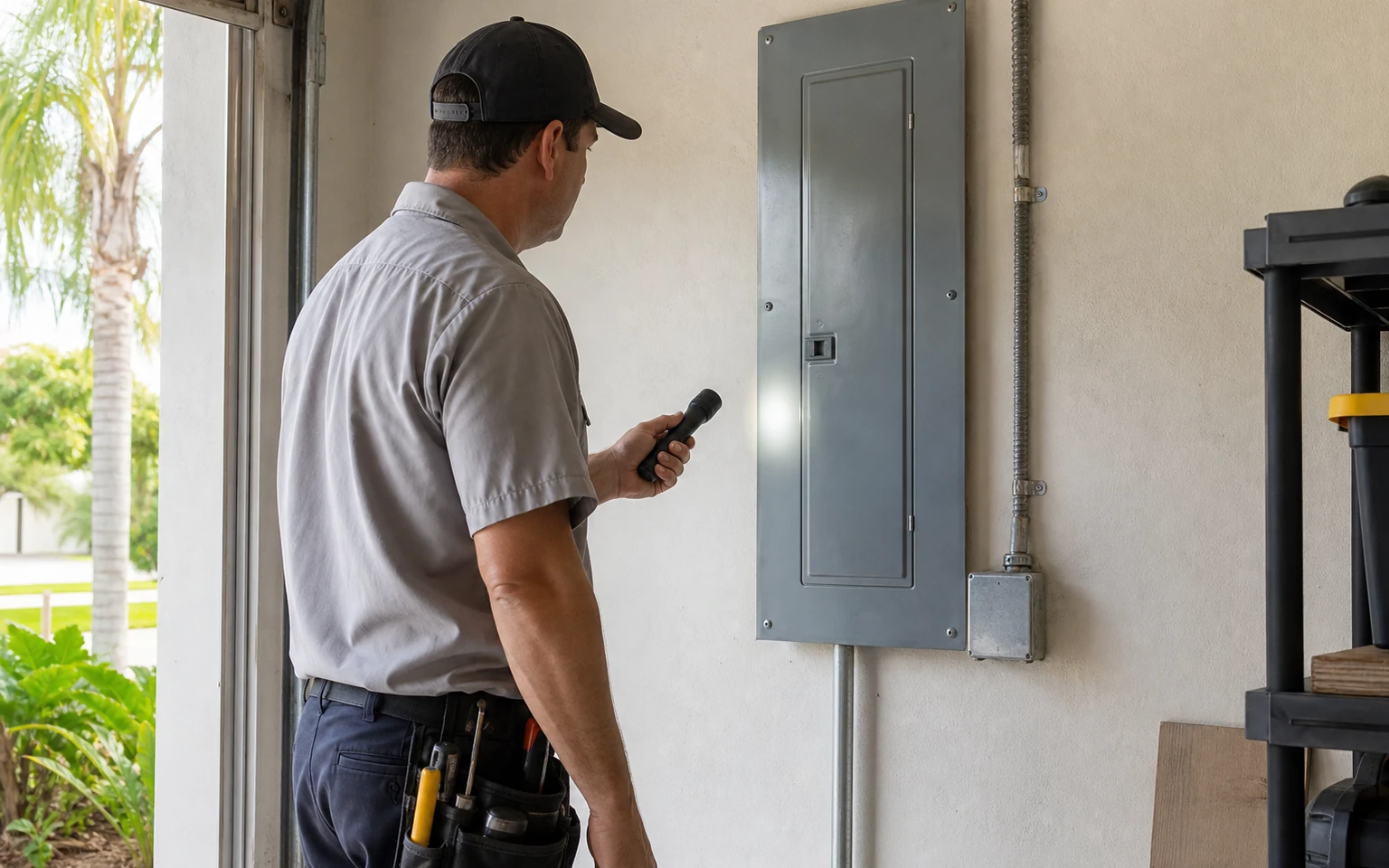
For any electric candidate, use the exact manufacturer specifications to identify voltage, circuit and other installation requirements. A qualified electrician should determine whether the existing branch circuit, panel and service can support the proposed equipment together with the home’s other loads. Do not infer spare capacity from the number of empty breaker spaces. If panel work, an EV charger, electric cooking or HVAC electrification is also planned, coordinate one load assessment and one practical sequence. The same planning discipline appears in BetterPowered’s electrical-panel assessment guide, even though the final equipment load here is different.
This step prevents two common scope errors: selecting equipment before knowing the infrastructure work it triggers, or upgrading infrastructure without a defined set of future loads. It still does not imply that a service upgrade is necessary; that determination belongs to the project’s load calculation and applicable rules.
Treat location as a performance and service constraint
Measure the available height, width and access path. Check the model’s required clearances, pipe connections, control access and service access. Identify a compliant route for drainage and any discharge piping. Consider whether a leak would threaten finished space or electrical equipment. For a Florida property with flood exposure, confirm the current requirements with the local authority using the Florida Building Commission’s code resources and supplements; do not rely on an old permit or a neighboring installation as the rule for this project.
If a heat-pump water heater is one of the candidates, location analysis must also cover available air, allowable ambient temperatures, sound, cooler exhaust air, condensate drainage and filter/service access. EPA ENERGY STAR’s current design considerations and installation best practices direct designers to follow model-specific manufacturer guidance and applicable local codes. That is a feasibility check, not a recommendation for or against the technology.
Location also affects the distribution system. EPA ENERGY STAR identifies distance from a central heater as a factor when assessing point-of-use water heating, especially for remote fixtures, and says costs and benefits should be assessed before choosing a decentralized approach. Before relocating a heater, compare the effect on the most-used fixtures and include any pipe insulation or recirculation-control work in the written scope.
Sequence the water-heater decision with the rest of the upgrade
A defensible sequence looks like this:
1. Document existing fuel, electrical, plumbing, venting, drainage and location conditions. 2. Record peak hot-water uses and planned changes to occupants, fixtures or appliances. 3. Decide which energy-source pathways are feasible, then complete any required load, fuel and venting assessments. 4. Confirm the location and distribution plan before comparing model ratings. 5. Compare candidates using the relevant FHR or GPM, UEF, manufacturer installation requirements and a disclosed operating-cost method. 6. Confirm permit, inspection and current code responsibilities with the contractor and local authority. 7. Install and commission the selected system, verify controls and drainage, and retain the model data, permits and settings with the property records.
This sequence should be coordinated with the broader whole-property upgrade plan. Demand-reducing fixture work belongs before final water-heater sizing. Electrical planning belongs before ordering equipment that depends on a new circuit. Location and distribution decisions belong before the installation quote is treated as complete.
Put the assumptions in the contractor’s scope
Ask each proposal to identify the exact model; energy source; applicable FHR or GPM and UEF; electrical, fuel and venting work; condensate and drainage plan; pipe and distribution changes; permit and inspection responsibility; removal of existing equipment; commissioning steps; and exclusions. If the proposal states an operating-cost or savings estimate, require the rate, usage, comparison equipment and calculation period. A number without those inputs is not evidence for this property.
Include a safe-temperature check in commissioning. The U.S. Consumer Product Safety Commission’s tap-water scald guidance urges residential users to lower water-heater temperature to 120°F to reduce scald risk. Have the qualified installer reconcile the setting, any temperature-limiting or mixing devices, the appliance instructions, household health needs and applicable local requirements rather than changing controls by trial and error.
The result of this process is not a universal product answer. It is a buildable scope: demand is documented, infrastructure is verified, the location supports the selected equipment, and the work is ordered so one upgrade does not create avoidable rework for the next.
Sources
- Whole-House Weatherization — U.S. Department of Energy
- Purchasing Energy-Efficient Residential Water Heaters — U.S. Department of Energy
- Water Heater Key Product Criteria — EPA ENERGY STAR
- Best Management Practice #7: Faucets and Showerheads — U.S. Department of Energy
- How It Works: High-Efficiency Gas Storage Water Heaters — EPA ENERGY STAR
- Heat Pump Water Heater Design Considerations — EPA ENERGY STAR
- Heat Pump Water Heater Installation Best Practices — EPA ENERGY STAR
- Point of Use Water Heaters — EPA ENERGY STAR
- Florida Building Code resources and supplements — Florida Building Commission
- Avoiding Tap Water Scalds — U.S. Consumer Product Safety Commission
Use this answer in a whole-property plan
Connect this topic to the planning hub, the primary decision page and the evidence standard that governs the next step.
- Planning hubWhole-home upgrade planning
- Primary decision pageEnergy advisory services
- Methodology and standardsHow BetterPowered uses illustrative scenarios
- Methodology and standardsBetterPowered Contractor Standard
Primary sources
Claims in this article were reviewed against these government and primary sources.
- 01 Whole-House WeatherizationU.S. Department of Energy · August 26, 2026
- 02 Purchasing Energy-Efficient Residential Water HeatersU.S. Department of Energy · August 26, 2026
- 03 Water Heater Key Product CriteriaEPA ENERGY STAR · August 26, 2026
- 04 Best Management Practice #7: Faucets and ShowerheadsU.S. Department of Energy · August 26, 2026
- 05 How It Works: High-Efficiency Gas Storage Water HeatersEPA ENERGY STAR · August 26, 2026
- 06 Heat Pump Water Heater Design ConsiderationsEPA ENERGY STAR · August 26, 2026
- 07 Heat Pump Water Heater Installation Best PracticesEPA ENERGY STAR · August 26, 2026
- 08 Point of Use Water HeatersEPA ENERGY STAR · August 26, 2026
- 09 Florida Building Code Resources and SupplementsFlorida Building Commission · August 26, 2026
- 10 Avoiding Tap Water ScaldsU.S. Consumer Product Safety Commission · August 26, 2026