Key takeaways
- Start with a baseline: utility history, roof documentation, HVAC age, panel information, comfort symptoms, moisture concerns and planned future loads.
- Roof condition gates solar; envelope and ducts gate HVAC sizing; electrical capacity gates batteries, EV charging and electrification.
- For comfort and humidity problems, diagnose HVAC, ducts and envelope together before choosing tonnage or a SEER2 tier.
- Solar-first can work for a stable, solar-ready home, but it is weak advice when roof, load or electrical assumptions are still unsettled.
- For new construction, prioritize design-stage decisions such as shading, duct location, low-SHGC glass, blower-door targets and Manual J/S/D calculations.
Quick Decision Table
Use the active constraint to choose the first decision, then sequence the projects that depend on it.
| Scenario | Best first decision | Evidence to collect | Likely follow-on sequence |
|---|---|---|---|
| High bills, uneven comfort or unclear cause | Assess the whole property before selecting equipment | Twelve months of bills, comfort notes, equipment history, roof and panel records | Verified scope, then HVAC, envelope, solar or electrical work based on the constraint |
| Failed HVAC or immediate end-of-life equipment | Restore safe comfort, but require load, duct and humidity checks before final tonnage where time allows | Failure diagnosis, temporary cooling need, Manual J assumptions, duct condition, return airflow and moisture symptoms | Emergency repair or replacement path, then duct or envelope correction and commissioning |
| Hot or humid rooms with aging HVAC | Verify load, airflow, ducts and envelope | Manual J/S/D assumptions, duct condition, return airflow, attic heat and moisture observations | Duct or envelope repair, then right-sized HVAC replacement or coordinated commissioning |
| Roof work and solar are both being considered | Resolve roof suitability and roof/solar interface | Remaining roof life, structural suitability, shade, attachment details, flashing, warranties and electrical route | Roof or attic work first when needed, then final solar layout |
| Outage resilience is the priority | Define critical loads and duration | Essential circuits, running watts, starting loads, desired backup hours, solar availability and panel configuration | Critical-load panel, battery, generator or hybrid design matched to the load plan |
| EV charging or broader electrification is planned | Review electrical capacity and future loads | Service size, panel condition, major loads, charger target, future heat-pump or water-heater plans | Load management, panel/service work if needed, then EV charger and later electric loads |
| Stable home with lower grid purchases as the goal | Confirm solar readiness and credible load assumptions | Utility history, roof condition, shade, usable area, interconnection assumptions and future EV or appliance loads | Solar proposal sized to current and future-load scenarios |
| New construction | Lock in design-stage efficiency decisions | Orientation, shading, duct location, glass specs, blower-door target and load calculations | Envelope and mechanical design first, then solar and storage sized to the finished load |
Start With Gating Conditions
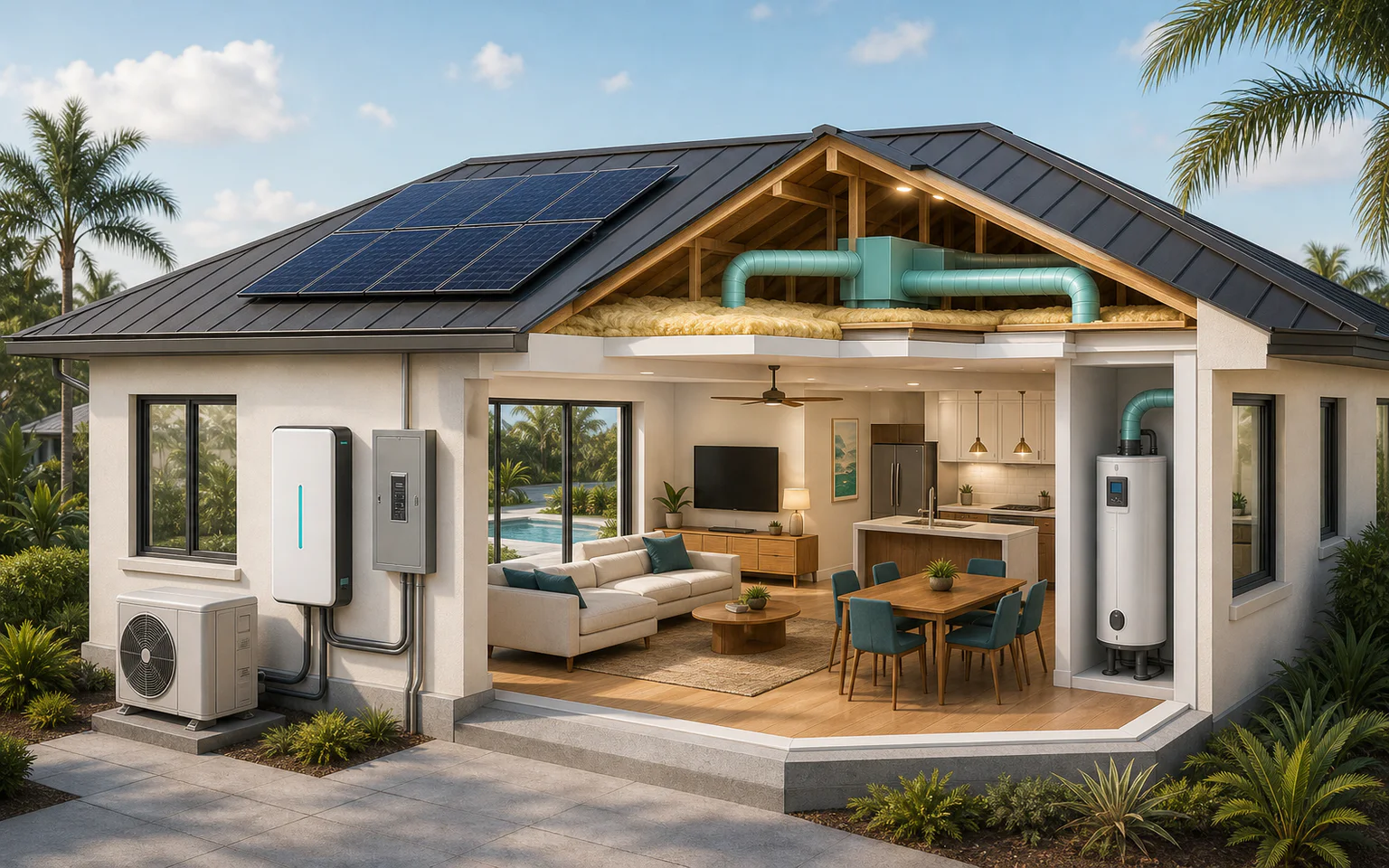
Before buying equipment, identify which decisions can force rework. Roof condition and remaining life affect solar timing and panel removal risk. Air sealing, insulation and duct conditions can change HVAC sizing and comfort expectations. Electrical capacity affects heat pumps, batteries, backup power and EV charging. Moisture, drainage or structural concerns should be resolved before work covers or encloses the affected area.How to Sequence a Florida Home Energy Upgrade: A whole-property framework for ordering HVAC, envelope, roofing, solar, storage, electrical and EV-charging decisions.
The baseline should connect each fact to a later decision. Twelve months of bills show current seasonal load. Roof age and permits affect solar timing. HVAC model, age and maintenance records affect replacement urgency. Panel photos and service size affect EV, battery and electrification options. Room-by-room comfort and moisture notes point to airflow, duct or envelope problems. Planned EVs, heat-pump water heaters or appliances change solar and electrical sizing.
If the cause is unclear, start with what is included in a Florida home energy audit and compare that with a utility energy audit vs. independent assessment in Florida before treating a contractor quote as the plan.
- If the roof is near replacement, leaking or structurally uncertain, verify the roof before signing a solar layout.
- If comfort or humidity is failing, diagnose airflow, ducts, envelope and equipment size before choosing replacement capacity.
- If an EV charger, battery or new electric appliance is planned, review panel and service capacity before assuming the installation path.
- If incentive timing is driving the project, confirm eligibility, equipment rules, contractor requirements, application sequence and funding before letting the incentive control the order.
When Comfort or Humidity Is the Problem
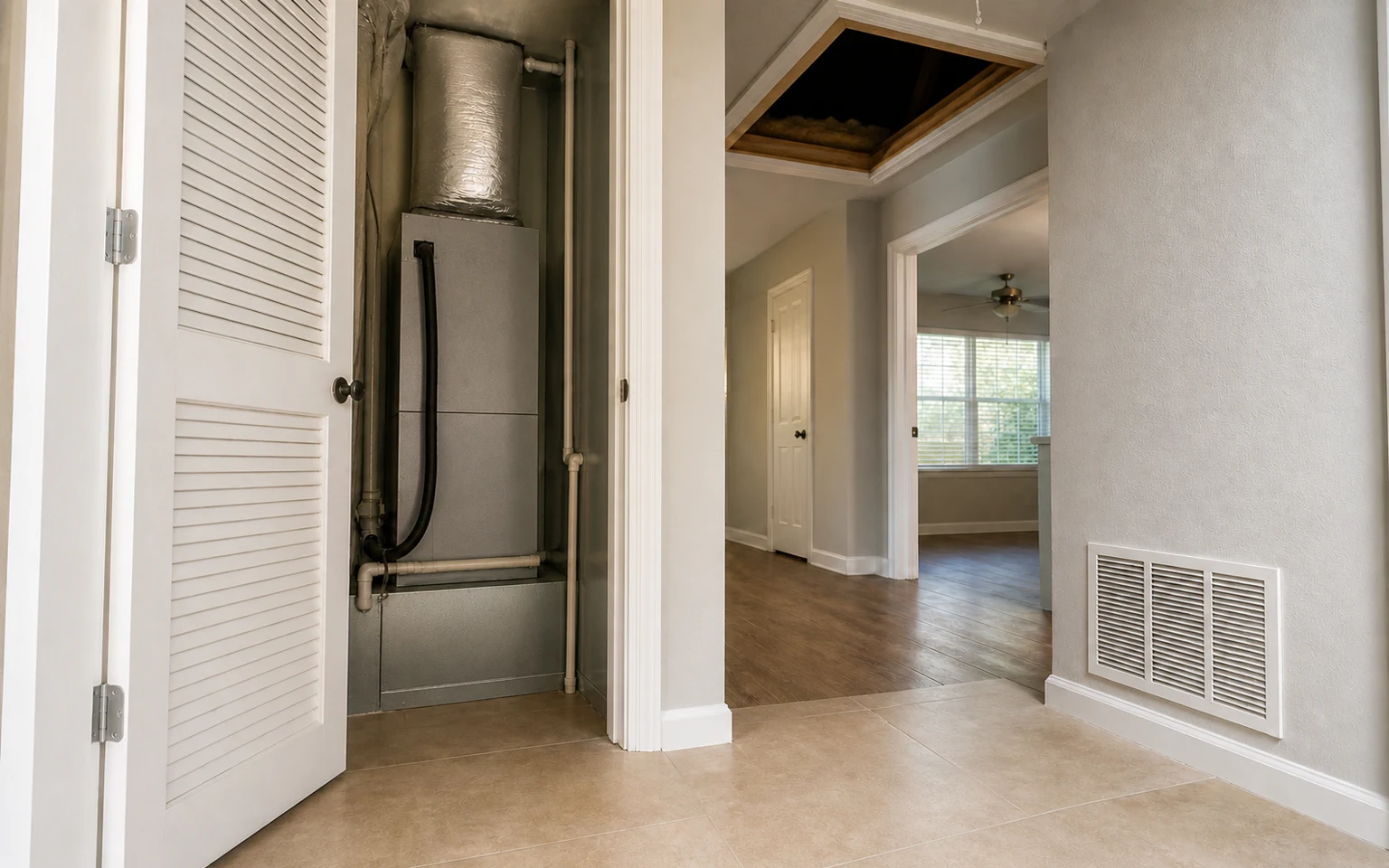
In Florida, HVAC decisions are also humidity decisions. Oversized equipment can cool the air quickly but run too briefly to remove enough moisture, leaving the home cold and damp. That is why the first decision should be the verified scope: Manual J load calculation, Manual S equipment selection, Manual D duct review, duct leakage or airflow checks, return-air constraints and commissioning steps.Florida HVAC Efficiency Upgrade ROI (2026) — SEER2 16 vs 18+ Payback | BuildPricedEnergy Efficient Homes in Florida: What to Know in 2026 | Green Key Village
The same high-efficiency HVAC premium does not pay back equally across the state. One source gives approximate cooling-hour ranges of 2,800-2,900 hours in Miami and 1,950-2,100 in Pensacola, so the same equipment can save materially different kWh by metro. Duct leakage, local utility rate and system sizing can matter as much as the efficiency label.Florida HVAC Efficiency Upgrade ROI (2026) — SEER2 16 vs 18+ Payback | BuildPriced
For next-step detail, use Duct sealing before HVAC replacement and Heat pump vs. central air in Florida to separate airflow, equipment and replacement questions.
Roof Before Solar
Roof verification should come before a solar commitment when the roof is old, leaking, shaded, structurally uncertain, subject to HOA or condo review, or likely to need replacement during the solar system life. The practical issue is not only whether panels can be installed. It is whether the final roof, attachment method, flashing, penetrations, warranties, removal-and-reinstallation terms, permits and electrical route are all compatible.Miami Sustainable Remodeling: Solar, Materials, and Energy Code Compliance That Actually Pay Off
If attic air sealing, insulation or duct repairs are likely, coordinate them before the final solar design when schedule allows. Those measures can reduce the load the array must cover; one cited efficiency-first source estimates insulation and air sealing can reduce required solar size by 5-15%.Why Solar Pairs with Efficiency Programs for Max Savings - Commercial + Residential Solar Power Florida
Efficiency Before Solar
Efficiency-first sequencing is strongest when the house has avoidable load that would otherwise be built into the solar system size. Air sealing, attic insulation, duct repair, lighting controls or HVAC correction can lower the baseline load before generation is designed.Why Solar Pairs with Efficiency Programs for Max Savings - Commercial + Residential Solar Power Florida
Illustrative solar-sizing calculation
Assume a Florida homeowner has a $25,000 solar proposal and expects attic air sealing and insulation to reduce the required system size by 10%.
Using the cited 5-15% solar-size reduction range as a planning assumption, a 10% reduction on a $25,000 system represents about $2,500 of avoided system cost before project-specific pricing or incentives.Why Solar Pairs with Efficiency Programs for Max Savings - Commercial + Residential Solar Power Florida
The point is not that every house saves exactly $2,500. It is that load reduction can change the solar design, so proposals should show both current-load and post-improvement-load scenarios.
When Solar Can Be Early
Solar can be a good early project when the home has stable comfort, a serviceable roof, manageable shade, credible utility history, understood interconnection assumptions and no imminent HVAC or envelope work that would materially change consumption. If an EV, heat-pump water heater or other electric load is planned soon, the solar proposal should model current consumption and future loads separately.Florida Home Electrification Roadmap 2026: What to Upgrade First | OhmSnap
This is the scenario where a solar-first ROI sequence is most defensible: the house is already solar-ready and no near-term roof, HVAC, duct, envelope or electrical change is likely to alter the design assumptions.
Use a proposal review process that tests assumptions instead of accepting one annual savings number. BetterPowered’s solar proposal sizing checklist is the relevant next step when solar is in the near-term sequence.
Storage and Backup Power
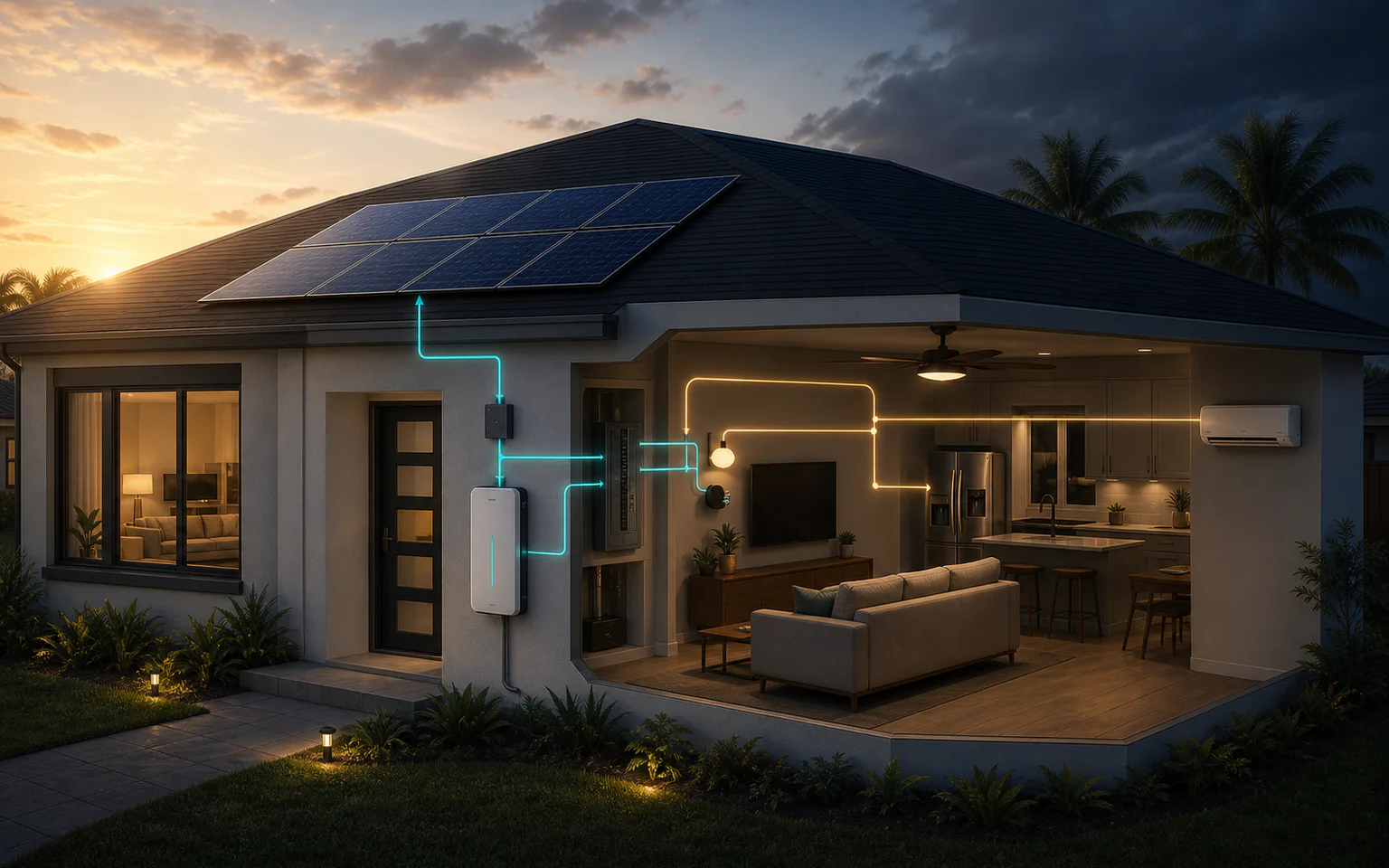
For resilience-first households, start with continuity requirements rather than payback. List refrigeration, selected lights, communications, medical or accessibility equipment, water or well equipment, cooling expectations and other essential circuits. Then compare battery, generator or hybrid proposals against the same load plan.
Before requesting quotes, write a critical-load schedule: each circuit, estimated running watts, any starting surge and required hours. Then ask each battery, generator or hybrid proposal to show which loads are backed up, for how long and under what solar-recharge assumption.How to Sequence a Florida Home Energy Upgrade: A whole-property framework for ordering HVAC, envelope, roofing, solar, storage, electrical and EV-charging decisions.
A documented example range is a 13.5-20 kWh battery serving essentials for roughly 24-36 hours, with duration changing if solar recharge is available and loads stay moderate. That is a planning example, not a universal capacity rule.Florida Home Electrification Roadmap 2026: What to Upgrade First | OhmSnap
For a more detailed load inventory, use How to plan home battery backup loads before comparing storage quotes.
EV and Electrification Readiness
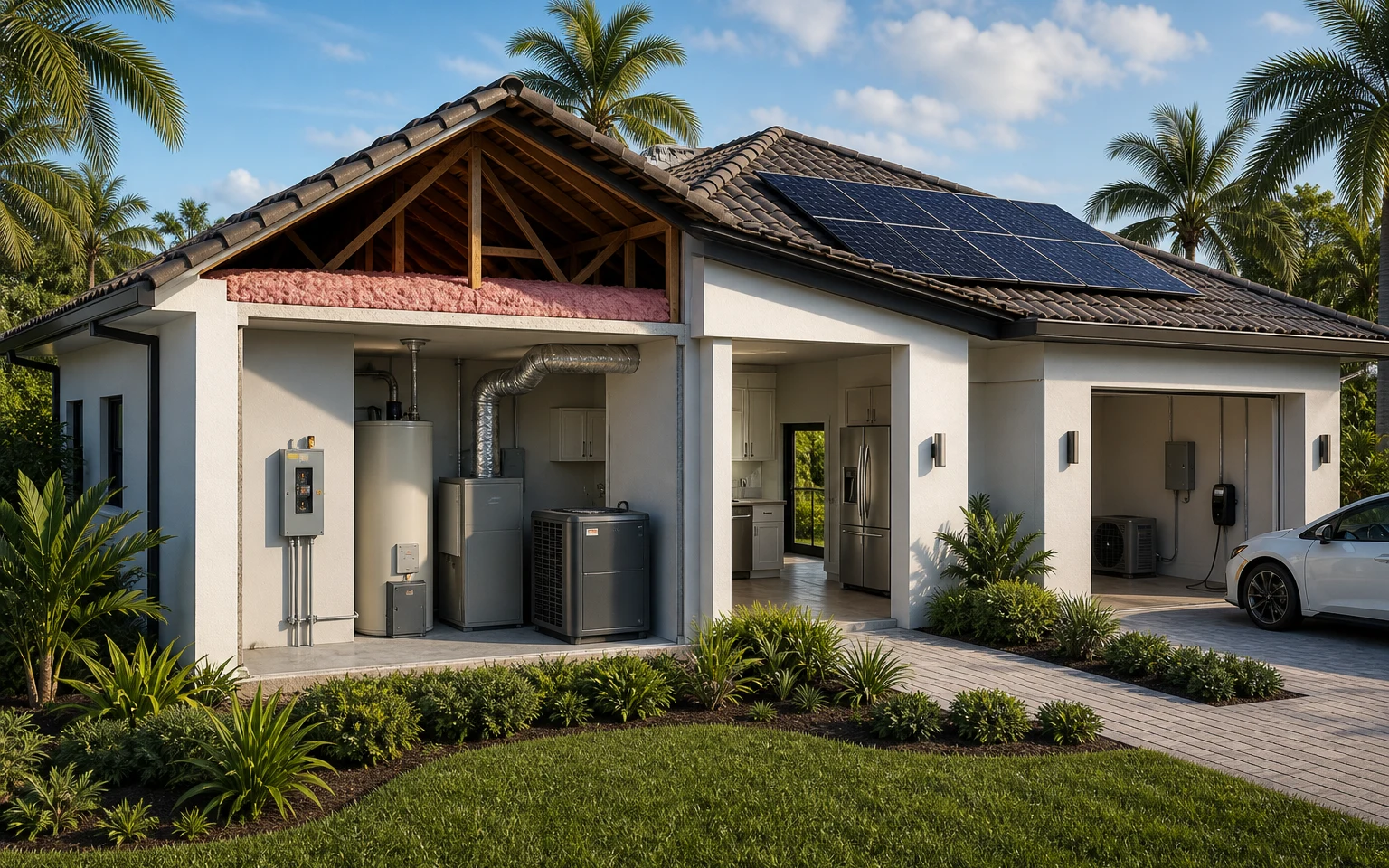
An EV charger, heat-pump water heater, induction range, HVAC replacement, solar inverter and battery can all affect the electrical plan. The first decision is whether the existing panel and service can support current and planned loads, whether load management changes the answer, and whether work should be sequenced to avoid reopening the electrical scope later.How to Sequence a Florida Home Energy Upgrade: A whole-property framework for ordering HVAC, envelope, roofing, solar, storage, electrical and EV-charging decisions.
Do not assume a panel replacement is always required, and do not assume spare breaker spaces prove capacity. Start with an electrical panel assessment before an EV charger when EV charging or broader electrification is part of the plan. If water heating is part of the future load, include it in the sequence with how a water heater fits into a whole-home energy upgrade plan.
New Construction Is Different
In a new Florida home, the sequence should favor irreversible design decisions and incremental cost. Orientation, shading, window solar heat gain, duct location, air-handler location, blower-door targets and Manual J/S/D calculations are cheaper to settle on paper than to correct after the house is built.Custom Built Homes Energy Efficiency | Florida Climate Zone 2
A strong new-construction order is: orient and shade the home, keep ducts and the air handler inside conditioned space where feasible, specify a tested air-sealing target, select low-SHGC glass, size HVAC from real load calculations, then size solar and storage to the finished load. That is different from a retrofit, where roof age, existing ductwork and current equipment condition may dictate the order.
Put those choices into the construction documents as measurable items: blower-door target, duct-leakage target or ducts inside conditioned space, Manual J/S/D deliverables, and window SHGC/U-factor specifications.
Compare Bids After the Sequence
Once the sequence is chosen, compare contractor proposals on equal terms. Normalize scope, exclusions, equipment or material specifications, sizing assumptions, permits, disposal, commissioning, warranties, change-order rules, schedule, payment milestones and incentive assumptions.How to Sequence a Florida Home Energy Upgrade: A whole-property framework for ordering HVAC, envelope, roofing, solar, storage, electrical and EV-charging decisions.
For HVAC, require load calculation, duct assumptions and commissioning. For solar, require current-load and future-load models. For batteries, require backed-up circuits and duration. For electrical work, require the service, panel and load-management basis. For roof-solar coordination, require flashing, attachment, warranty and removal/reinstallation terms.
Two HVAC bids are not equivalent if only one includes duct testing, Manual J and commissioning. Two solar bids are not equivalent if only one models future EV load. Two backup proposals are not equivalent if they serve different circuits for different durations.
BetterPowered helps Florida homeowners assess energy needs, plan whole-property upgrade sequences and connect with vetted participating contractors. Participating contractors perform the applicable HVAC, insulation, roofing, solar, storage, electrical, EV-charging and other trade work.
Useful Next Steps
- What is included in a Florida home energy audit
- Utility energy audit vs. independent assessment in Florida
- Attic insulation for hot-humid Florida homes
- Impact windows in Florida: separate comfort from resilience
- How a water heater fits into a whole-home energy upgrade plan
Use this answer in a whole-property plan
Connect this topic to the planning hub, the primary decision page and the evidence standard that governs the next step.
- Planning hubWhole-home upgrade planning
- Primary decision pageEnergy advisory services
- Methodology and standardsHow BetterPowered uses illustrative scenarios
- Methodology and standardsBetterPowered Contractor Standard
Sources
Sources used for the comparisons and explanations in this article.
- 01 How to Sequence a Florida Home Energy Upgrade: A whole-property framework for ordering HVAC, envelope, roofing, solar, storage, electrical and EV-charging decisions.betterpowered.prose.sh · September 9, 2026
- 02 Florida Home Electrification Roadmap 2026: What to Upgrade First | OhmSnapwww.ohmsnap.com · September 9, 2026
- 03 Florida HVAC Efficiency Upgrade ROI (2026) — SEER2 16 vs 18+ Payback | BuildPricedBuildPriced · September 9, 2026
- 04 Why Solar Pairs with Efficiency Programs for Max Savings - Commercial + Residential Solar Power FloridaSolar Energy Management · September 9, 2026
- 05 Miami Sustainable Remodeling: Solar, Materials, and Energy Code Compliance That Actually Pay Offabdulwahab · September 9, 2026
- 06 Energy Efficient Homes in Florida: What to Know in 2026 | Green Key VillageGreen Key Village · September 9, 2026
- 07 Custom Built Homes Energy Efficiency | Florida Climate Zone 2Oren Azoulay · September 9, 2026